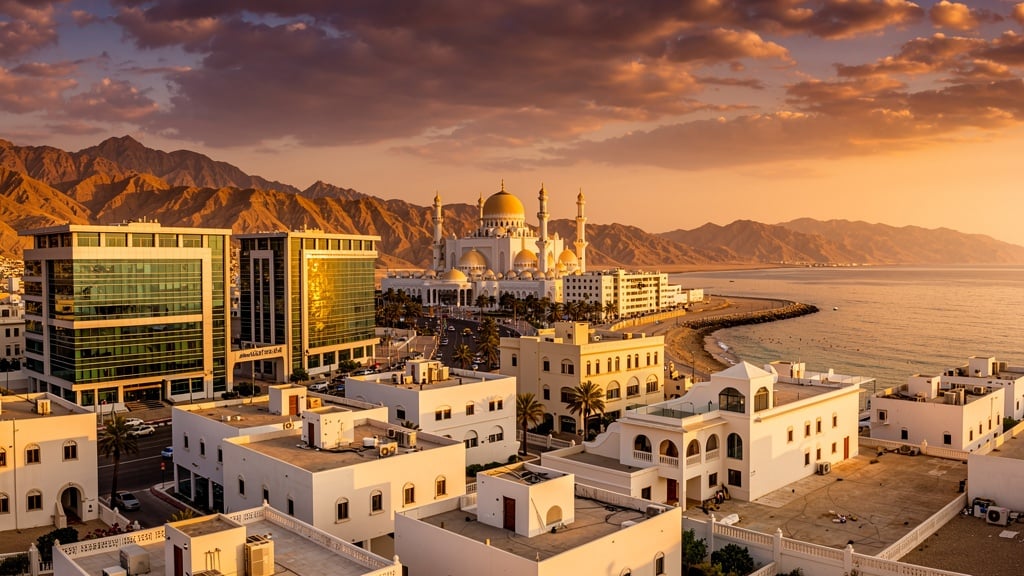
Panoramic view of Muscat, Oman at golden hour with the cityscape and Arabian Sea
Arabia's Most Captivating Capital

Welcome to Muscat,
The Jewel of Oman

Where ancient desert traditions meet glistening modernity along the shores of the Arabian Sea. Muscat beckons with grand mosques, labyrinthine souqs, dramatic mountain backdrops and an unrivalled warmth of spirit.

4,000+ Years of History
25Β°C Winter Avg. Temp
Visa-Free For 100+ Nations
No.1 Safest Arab City
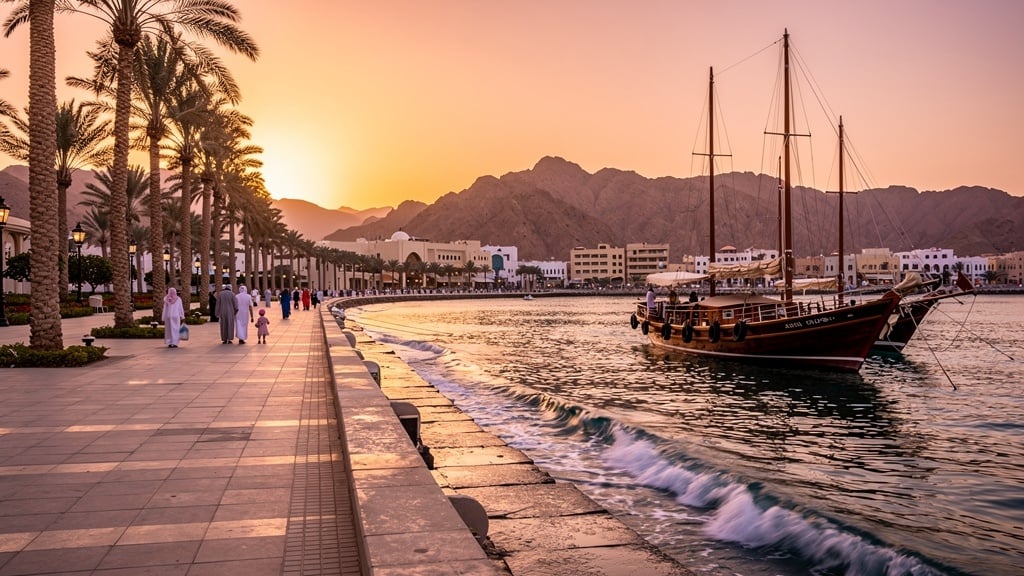
Muscat Corniche at sunset with traditional dhow boats on the Arabian Sea
πŸ…
UNESCO Recognised Cultural Heritage City

A City Where the Ancient World Breathes Alongside the Modern

Muscat, the proud capital of the Sultanate of Oman, sits cradled between the dramatic Hajar Mountains and the shimmering blue expanse of the Gulf of Oman. For over four thousand years this city has served as a critical port of call for Arab, Persian, Indian and Portuguese traders who recognised both its strategic position and its extraordinary natural harbour. Today it remains one of the most beautifully preserved capital cities in the entire Arab world β€” a place where whitewashed traditional architecture is strictly maintained by law, where no building may rise above the height of the surrounding hills, and where streets remain clean, orderly and unhurried in comparison with the frenetic energy of many of its regional neighbours.

First-time visitors to Muscat are invariably struck by an almost paradoxical quality: a city that feels both deeply ancient and remarkably contemporary. The old Mutrah district preserves a living, breathing souq where frankincense and sandalwood perfume the narrow alleyways just as they have for centuries. Yet a few kilometres inland, the soaring minarets and vast marble courtyards of Sultan Qaboos Grand Mosque represent some of the finest Islamic craftsmanship of the twenty-first century. Between these two worlds lies a city of tree-lined boulevards, world-class museums, luxury beach resorts, and a Corniche waterfront that is widely regarded as one of the most scenic in the Middle East.

πŸ•Œ

Islamic Architecture

Grand mosques with breathtaking tile work and soaring minarets

🌊

Coastal Beauty

Pristine beaches, rocky coves and crystal-clear Arabian Sea waters

🏰

Ancient Forts

Portuguese-era fortifications guarding the old city skyline

πŸ›οΈ

Vibrant Souqs

Fragrant spice markets, silverwork and handcrafted Omani goods

Six Reasons Muscat Belongs on Every Traveller's Bucket List

Muscat is not merely a stopover β€” it is a destination that rewards every style of traveller with depth, authenticity and unforgettable experiences.

πŸ›‘οΈ

Exceptionally Safe

Oman consistently ranks among the safest countries in the world. Muscat's low crime rates, respectful culture and visitor-friendly environment make it perfect for solo travellers, couples and families alike.

πŸ›οΈ

Unparalleled Heritage

From 17th-century Portuguese forts perched atop rocky headlands to the labyrinthine alleyways of Mutrah Souq, Muscat's historical fabric is extraordinarily rich and genuinely accessible to all visitors.

🍽️

World-Class Cuisine

Omani cuisine is a fragrant fusion of Arabic, Indian and East African culinary traditions. In Muscat you will discover everything from humble roadside shuwa stalls to rooftop restaurants overlooking the glittering harbour.

πŸ‹

Marine Wonders

Muscat's coastline offers world-class diving and snorkelling, whale and dolphin watching excursions, sea turtle nesting beaches, and some of the most dramatic dhow sailing in the region.

🎭

Arts & Culture

The Royal Opera House Muscat β€” one of the finest performance venues in the Arab world β€” regularly hosts international orchestras, ballet companies and world-music acts in its exquisitely decorated auditorium.

πŸŒ„

Dramatic Landscapes

Within an hour of the city you can be wadi-bashing through slot canyons, driving across ochre sand dunes, or hiking the Hajar Mountains past ancient falaj irrigation channels unchanged since the Iron Age.

The Remarkable History of Muscat β€” From Ancient Port to Modern Capital

The story of Muscat is inseparable from the story of the sea. Long before the Christian era, Omani sailors were already renowned throughout the ancient world for their extraordinary maritime skills and their ability to navigate the monsoon winds of the Indian Ocean with devastating precision. The harbour at Muscat was ideally suited to the pattern of monsoon trading: sheltered enough to permit year-round anchorage, yet open enough to allow rapid departure when the seasonal winds changed direction. Merchants from the Indus Valley, Mesopotamia, the Persian Gulf and the East African coast all recognised Muscat as an indispensable waystation on the ancient spice routes.

Portuguese Rule and the Birth of the Forts

In 1507, the Portuguese admiral Afonso de Albuquerque arrived in Muscat with a powerful fleet and β€” after brief but fierce resistance β€” captured the city, establishing it as a critical node in Portugal's expanding Indian Ocean empire. The Portuguese ruled Muscat for more than 140 years, during which they constructed the twin fortifications of Al Mirani and Al Jalali that still dominate the city's rocky headland today. These forts were not merely military installations; they were statements of imperial intent, visible from far out to sea and designed to project the power of the Portuguese crown across the entire western Indian Ocean.

The Portuguese legacy in Muscat was ultimately ended by the rising power of the Ya'aruba dynasty of Oman, who in 1650 expelled the European occupiers following a prolonged campaign that combined military force with diplomatic cunning. The Ya'aruba rulers went on to build a formidable Omani maritime empire of their own, controlling much of the East African coast and establishing trading posts as far afield as Zanzibar and Mozambique.

The Al Said Dynasty and the Modern Era

The Al Said dynasty, which continues to rule Oman to this day, came to power in 1749 under Ahmad ibn Said. Under Al Said leadership β€” and particularly under the reign of Sultan Qaboos bin Said Al Said, who ruled from 1970 until his death in 2020 β€” Muscat underwent a transformation of almost unimaginable scale. In 1970 Oman was one of the poorest and most isolated countries on earth. By the time of Sultan Qaboos's death, Muscat had become a modern, well-planned capital city with excellent infrastructure, a world-class airport, internationally recognised universities, a thriving arts scene and a tourism industry that welcomed visitors from across the globe.

Yet through all of this development, Sultan Qaboos insisted that Muscat retain its distinctive architectural character. His vision β€” enshrined in strict building regulations β€” was that the city should modernise without losing its soul. The result is a capital that feels genuinely unique among Gulf cities: spacious, orderly, clean, aesthetically harmonious, and deeply aware of its own history and identity.

Muscat Today: The City's Many Neighbourhoods

Modern Muscat is actually a sprawling metropolitan area made up of several distinct districts, each with its own character and appeal. The original Old Muscat district, clustered around the twin Portuguese forts and the Sultani Palace complex, retains much of its historic charm with narrow lanes, painted gateways and the faint scent of frankincense drifting from nearby homes. Adjacent to it is Mutrah, the old trading quarter, whose famous Corniche waterfront and ancient covered souq draw both local residents and international visitors in equal measure.

Moving inland along the coast you encounter the modern commercial heart of Ruwi, Muscat's original business district with its towering office blocks, currency exchange offices and colourful Indian quarter. Further west lies the diplomatic quarter of Shati Al Qurum, home to embassies, upmarket restaurants and the elegant Qurum Natural Park. Beyond that, Bausher and Al Ghubrah house the vast Sultan Qaboos Grand Mosque complex, the Royal Opera House and many of Muscat's finest hotels. At the western edge of the metropolitan area, the districts of Al Seeb and Muscat International Airport serve as the gateway through which most international visitors first arrive.

Omani Culture: A Society Built on Hospitality

Understanding Muscat requires at least a passing familiarity with the cultural values that animate Omani society. Chief among these is the principle of karam β€” generosity and hospitality β€” which Omanis regard not merely as a social nicety but as a moral and religious obligation. A stranger who asks for directions in Muscat is quite likely to be escorted personally to their destination. An invitation to share coffee, dates and halwa (a sweet confection of rose water, saffron and clarified butter) is a genuine expression of warmth that should be accepted, however briefly, with gratitude and respect.

Omanis are largely followers of the Ibadi school of Islam, an early Islamic tradition distinct from both Sunni and Shia Islam and characterised historically by its emphasis on moderation, consultation and religious tolerance. This moderate Islamic tradition has shaped a society that is broadly welcoming to people of all faiths and nationalities, and that prides itself on peaceful coexistence. Visitors to Muscat will not encounter the social restrictions common in some neighbouring Gulf states; women may drive, alcohol is available in licensed hotels and restaurants, and dress codes β€” while generally modest β€” are not excessively restrictive for tourists exploring the city's public spaces.

The Natural Setting: Mountains, Wadis and the Arabian Sea

Muscat's physical geography is extraordinarily dramatic. The city is hemmed in to the north and west by the Al Hajar range β€” a rugged spine of limestone mountains that in places rises to over 3,000 metres above sea level and that offers some of the most spectacular off-road driving and trekking in the Arabian Peninsula. The contrast between the grey-brown mountain ramparts and the turquoise sea below them is startling, particularly at dawn and dusk when the light turns the rock faces gold and amber.

Between the mountains and the sea, a network of ancient wadis β€” seasonal riverbeds that run with water after winter rains β€” cuts through the landscape, creating pockets of lush green vegetation that feel miraculous in the context of the surrounding aridity. Some wadis, like Wadi Shab and Wadi Bani Khalid, have become popular day-trip destinations from Muscat, offering freshwater pools, natural rock slides and spectacular canyon scenery within two to three hours' drive of the city centre.

The Arabian Sea coastline around Muscat ranges from sweeping white sand beaches ideal for swimming and water sports to dramatic rocky headlands where the sea crashes against ancient volcanic cliffs. Turtles nest on beaches near Ras Al Hamra and Qurayat, providing one of Oman's most magical natural spectacles between October and February each year.
Muscat's Unmissable Highlights

These iconic landmarks define the Muscat experience and should be on every itinerary, however brief your stay.

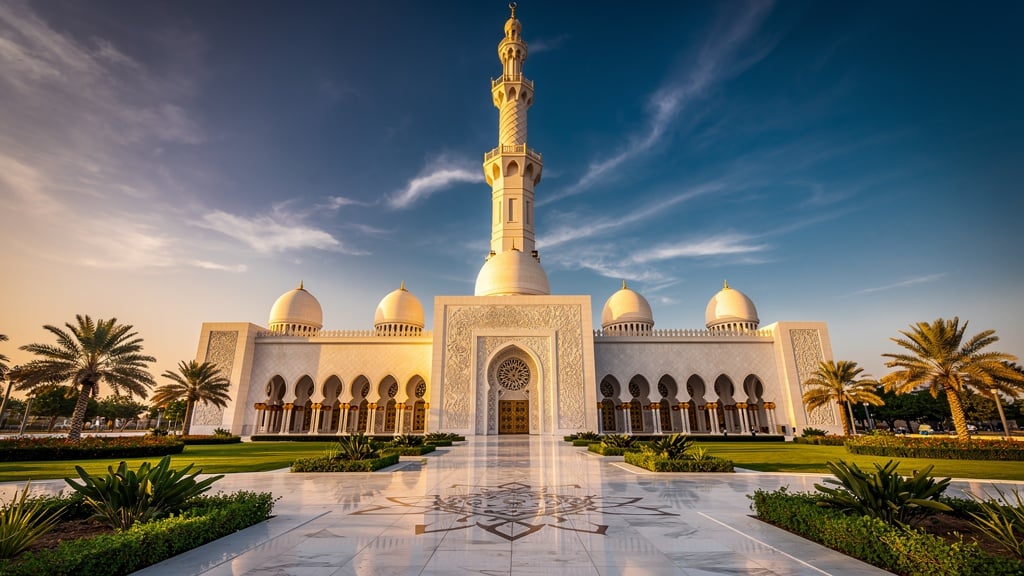
Sultan Qaboos Grand Mosque in Muscat with its white marble domes and minarets
Landmark

Sultan Qaboos Grand Mosque

One of the world's great religious buildings, this marble masterpiece took 6 years to build and can accommodate 20,000 worshippers. Its main prayer hall houses Oman's largest chandelier and a hand-woven Persian carpet that is among the largest in the world. Non-Muslim visitors are welcome during designated hours and guided tours are available.

⏱ Allow 1.5–2 hours πŸ†“ Free Entry
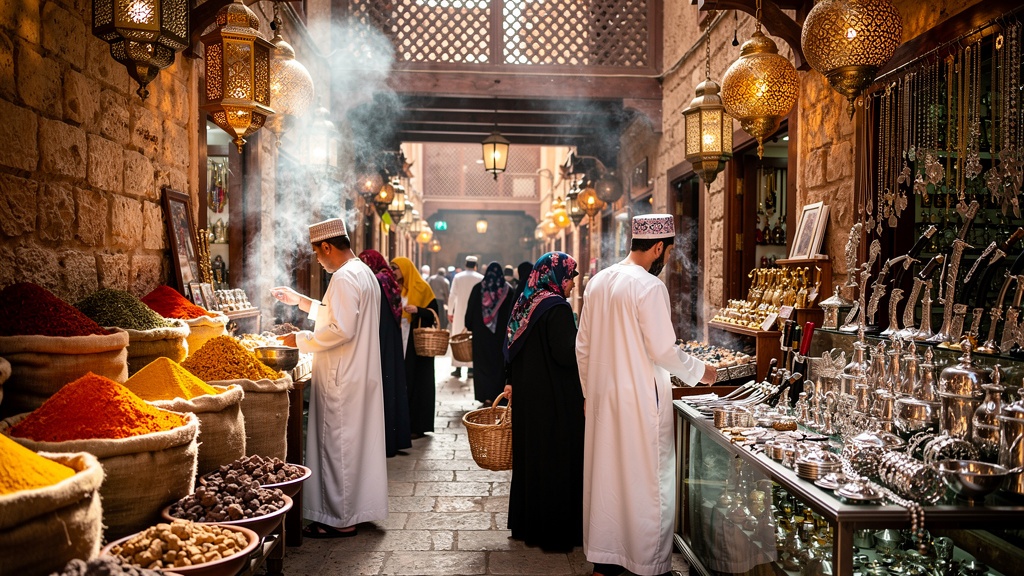
Mutrah Souq in Muscat with colourful spice stalls and lanterns
Market

Mutrah Souq & Corniche

One of the oldest souqs in Arabia, Mutrah Souq is a sensory labyrinth of frankincense, silver jewellery, hand-embroidered textiles and traditional Omani khanjars (daggers). The adjacent Corniche waterfront offers spectacular harbour views and is perfect for an evening stroll as the sun descends behind the mountains.

⏱ Allow 2–3 hours πŸ›οΈ Shopping
Muscat Corniche at sunset with traditional wooden dhow boats in the harbour
Waterfront

The Muscat Corniche

Stretching along the harbourfront of Mutrah, the Muscat Corniche is one of the most scenic waterfront promenades in the Arab world. Lined with palm trees, traditional dhow boats and elegant white buildings, it is a magnet for both tourists and local families, particularly in the cooler winter months when the evening air carries the scent of jasmine.

⏱ Allow 1–2 hours πŸŒ… Best at Sunset
See All Attractions β€Ί

Muscat Has Something for Everyone

πŸŽ’ For Solo Adventurers

Muscat is consistently rated among the very safest cities in the world for solo travel. The city's efficient road network, affordable taxis and increasingly comprehensive public transport system make independent exploration straightforward even for first-time visitors to the Gulf region. Solo travellers will particularly appreciate the city's relaxed, unhurried atmosphere β€” there is no pressure to rush, no aggressive touts and no need to bargain frantically in the souq (though gentle negotiation is always appreciated and expected). The Muscat tourist information offices, situated near the Corniche and at the airport, provide excellent free maps and up-to-date guidance on current opening hours, special events and recommended local restaurants.

πŸ‘¨β€πŸ‘©β€πŸ‘§β€πŸ‘¦ For Families with Children

Muscat is an outstanding destination for families. The city's many beach parks, its award-winning Muscat Aquarium, the interactive displays at the Natural History Museum and the child-friendly layout of the Sultan Qaboos Grand Mosque all make for memorable family experiences. Families planning a winter visit should not miss the chance to watch nesting sea turtles at Ras Al Hamra β€” one of the most remarkable wildlife spectacles in the Arabian Peninsula and an experience that invariably leaves children (and adults) speechless. Muscat's numerous family-friendly restaurants, shopping malls and beach resorts ensure that there is never a shortage of things to see and do, whatever the ages of family members.

πŸ’‘ For Couples & Honeymooners

Romantic Muscat has long been a favoured honeymoon destination for travellers from across Europe, India and South-East Asia. The combination of luxury beachfront resorts, intimate rooftop restaurants overlooking the illuminated harbour, private dhow sunset cruises and the sheer visual drama of the city's mountain and sea backdrop creates an almost cinematic setting for romance. The Six Senses Zighy Bay, situated on the Musandam Peninsula north of Muscat, is regularly cited among the world's top romantic resort destinations β€” accessible by road, boat or the particularly thrilling option of a tandem paraglide descent from the clifftops above.

🏊 For Water Sports Enthusiasts

The waters off Muscat offer world-class diving and snorkelling, with visibility frequently exceeding 25 metres and a rich variety of marine life that includes whale sharks, manta rays, moray eels, lionfish, nudibranchs and large schools of reef fish. The dive sites around Bandar Al Khayran, a protected inlet 40 kilometres east of Muscat, are particularly celebrated for their diversity and accessibility. For those who prefer to stay on the surface, kayaking, paddleboarding, jet skiing and traditional dhow sailing are all available along the Muscat coastline, while the city's dedicated water parks provide family-friendly aquatic entertainment throughout the year.

Ready to Discover Muscat?

Dive into our comprehensive attraction guide or start planning your trip with our expert travel tips, visa info and packing checklists.