Sultan Qaboos Grand Mosque in Muscat, Oman – a stunning example of Islamic architecture

Explore Muscat's Finest Attractions

Grand mosques, ancient forts, vibrant souqs, world-class performing arts and pristine beaches β€” every corner of Muscat rewards discovery.

Your Complete Guide to Muscat's Best Places to Visit

From the contemplative grandeur of its mosques to the chaotic beauty of its markets, Muscat offers an extraordinary range of experiences within a remarkably compact and easy-to-navigate metropolitan area.

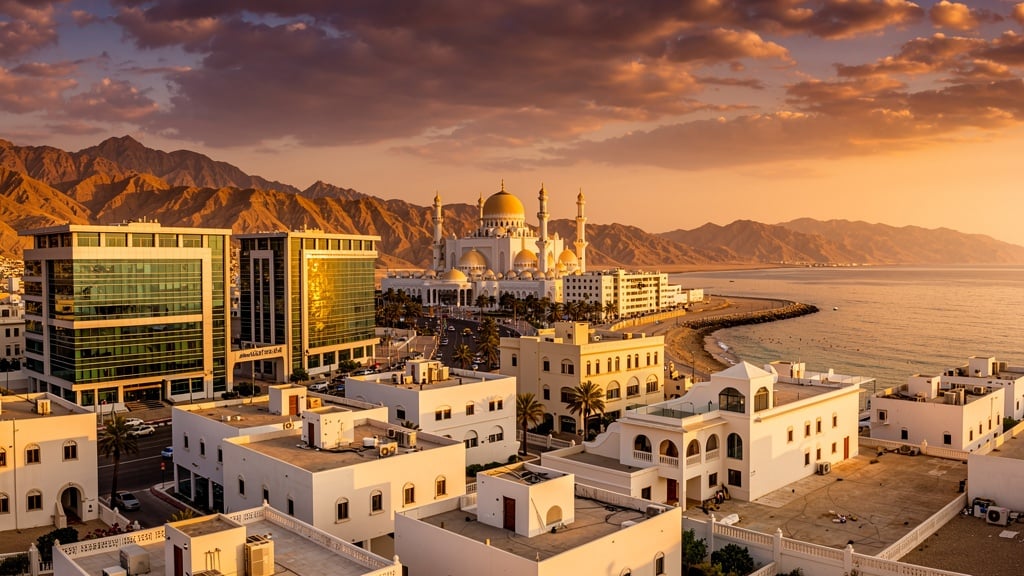
Muscat's attractions are distributed across its many distinct neighbourhoods, each contributing its own flavour to the city's rich tapestry. The old city area near the Corniche is home to ancient souqs, forts and the iconic royal palace. The newer western districts house the Grand Mosque, the Opera House and the diplomatic quarter's elegant parks. And threading through all of these, the Arabian Sea coastline provides a constant backdrop of blue water, white sand and dramatic mountain scenery.

What makes Muscat particularly rewarding for the independent traveller is the sense that genuine cultural depth is always just beneath the surface. A brief conversation with a silver merchant in Mutrah Souq can lead to an impromptu lesson in Omani metalworking traditions that stretch back centuries. An afternoon spent in the collection galleries of Bait Al Zubair Museum illuminates the extraordinary diversity of Omani tribal life across the country's many distinct regions. And an evening performance at the Royal Opera House β€” in one of the world's most architecturally breathtaking concert halls β€” is an experience that rewards every preconception about the cultural life of Gulf cities.

Muscat's Most Iconic Landmarks & Cultural Sites

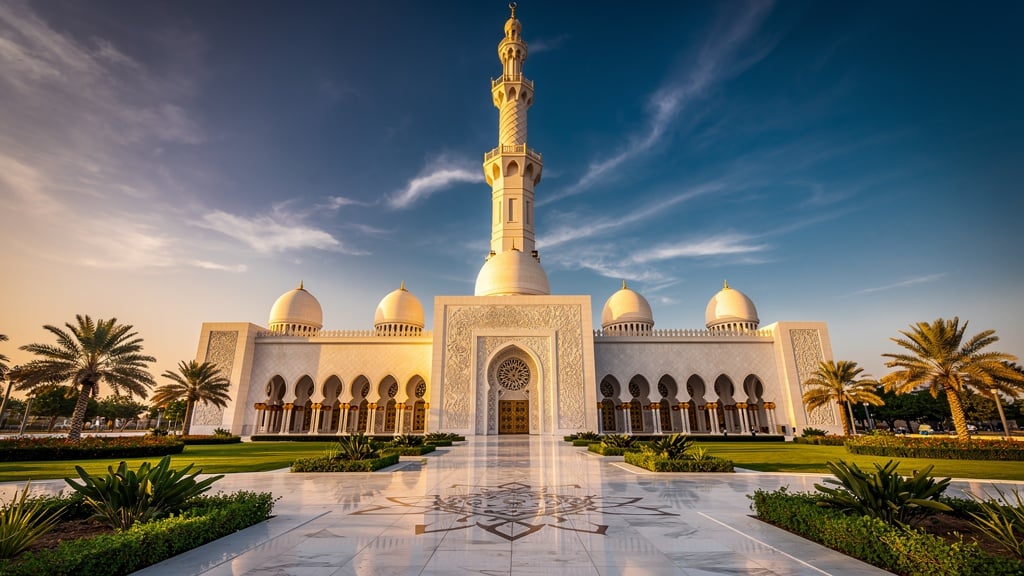
Sultan Qaboos Grand Mosque exterior showing its white marble facade, minarets and ornate Islamic architecture
Mosque

Sultan Qaboos Grand Mosque

The Sultan Qaboos Grand Mosque stands as one of the most magnificent religious buildings constructed anywhere in the world during the twentieth century. Completed in 2001 after six years of construction by 1,500 workers, it covers an area of 416,000 square metres and is capable of accommodating 20,000 worshippers within its main prayer hall and its vast, immaculately maintained gardens. The main prayer hall's interior is dominated by a single hand-knotted Iranian carpet measuring approximately 4,343 square metres β€” at the time of its installation one of the largest carpet pieces ever woven in a single piece β€” and by a central chandelier that weighs approximately 8.5 tonnes and is encrusted with Swarovski crystal. Non-Muslim visitors are welcome to tour the mosque complex Saturday to Thursday between 8:00 AM and 11:00 AM; appropriate dress (covering shoulders, arms and legs; women to cover hair) is required and provided free of charge at the entrance.

πŸ“ Al Ghubrah, Muscat
πŸ•’ Sat–Thu, 8AM–11AM (non-Muslims)
πŸ’° Free Entry
⏱ Allow 1.5–2 hours
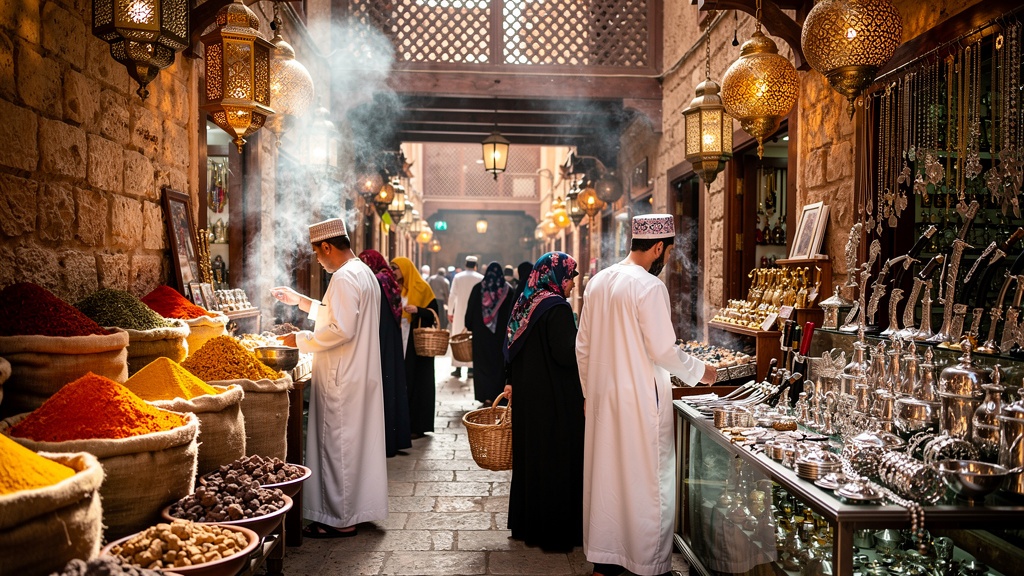
Mutrah Souq interior with colourful spice stalls, silver jewellery and hanging lanterns in the historic market
Market

Mutrah Souq β€” The Old Arabian Bazaar

Mutrah Souq occupies its labyrinthine position at the heart of Muscat's old trading quarter just as it has for centuries, and it remains one of the most authentic and evocative traditional markets in the entire Arab world. Unlike many Middle Eastern souqs that have been sanitised and adapted for tourist consumption, Mutrah retains a genuine commercial and social vitality: local Omani families shop here alongside international visitors, and the mix of goods on offer ranges from frankincense and rosewater perfumes to plastic toys and mobile phone accessories. The most interesting sections are those dedicated to traditional Omani crafts: hand-beaten silver jewellery, intricately embroidered dishdasha robes, silver-handled khanjar daggers, hand-painted Omani pottery, carved wooden chests and all manner of incense and scented wood. Bargaining is expected and perfectly acceptable, though the Omani approach to negotiation is generally gentler and less pressured than in many other regional markets. The best time to visit is early evening when the souq is busiest, the lighting most atmospheric, and the smells of cooking drifting in from adjacent restaurants.

πŸ“ Mutrah District
πŸ•’ Daily 9AM–1PM, 4PM–10PM
πŸ’° Free Entry
⏱ Allow 2–3 hours
Muscat old city area near Al Alam Palace with traditional Omani architecture and the harbour
Palace

Al Alam Palace & Old Muscat

The gleaming blue and gold facade of Al Alam Palace β€” the ceremonial royal palace of the Sultan of Oman β€” is the focal point of the old city district of Muscat proper. Although the interior is not open to the public, the palace's theatrical exterior, flanked by two tall ceremonial towers in striking blue and gold, can be photographed freely from the adjacent public square and from the waterfront promenade below. Flanking the palace on either side are the twin Portuguese-era forts of Al Mirani and Al Jalali, perched atop dramatic rocky headlands and serving as permanent reminders of Muscat's turbulent colonial history. The old city area surrounding the palace is one of the most pleasant parts of Muscat for a leisurely walk: the streets are quiet, the architecture is beautifully maintained in traditional Omani style, and the views from the sea wall across the harbour are exceptional at any time of day. The nearby Bait Al Alam gate β€” one of the original gateways to the historic walled city β€” is a particularly photogenic landmark that rewards exploration on foot.

πŸ“ Old Muscat
πŸ•’ Exterior: Open 24 hours
πŸ’° Free (exterior)
⏱ Allow 1–2 hours
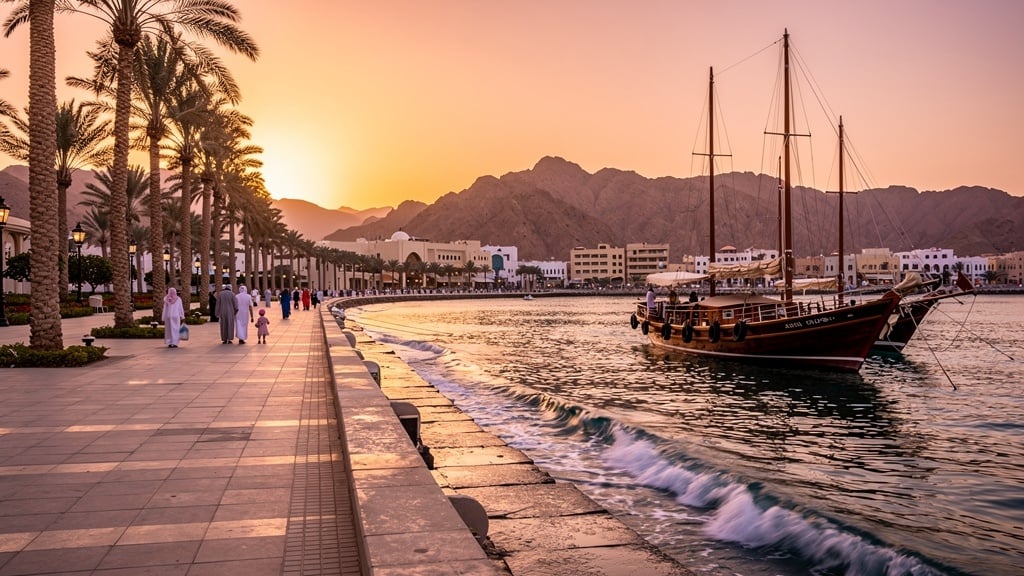
Muscat Corniche at sunset with architectural reflections in the calm harbour waters
Performing Arts

Royal Opera House Muscat

The Royal Opera House Muscat stands as one of the most extraordinary cultural institutions in the entire Arab world β€” a world-class performing arts venue that combines architectural magnificence with an ambitious programme of international performances that would not look out of place in London, Milan or Vienna. Inaugurated in 2011 by the late Sultan Qaboos, the complex was designed to blend traditional Omani Islamic architecture with modern concert-hall engineering, and the result is a building of genuinely breathtaking beauty. The main auditorium seats 1,100 guests in extraordinary comfort and boasts near-perfect acoustics that have drawn praise from visiting performers from around the world. The Royal Opera House's annual programme typically includes productions by major international opera companies, visits from world-famous orchestras, classical ballet and contemporary dance performances, as well as concerts by Arabic and world-music artists of international stature. The complex also includes a boutique shopping arcade, several excellent restaurants and beautifully landscaped gardens that are popular with Muscat residents for evening walks. Guided tours of the building are available for visitors who wish to appreciate the architecture and craftsmanship without attending a performance.

πŸ“ Shati Al Qurum
πŸ•’ Tours: Sun–Thu 8AM–2PM
πŸ’° From OMR 5 (tours)
⏱ Allow 1–3 hours
Traditional Omani crafts, silverwork and artefacts representing Omani cultural heritage
Museum

Bait Al Zubair Museum β€” Omani Heritage in Depth

For visitors who wish to gain a deeper understanding of Omani culture, history and traditional material life, the Bait Al Zubair Museum in the old Muscat district is an indispensable stop. Housed in a beautifully restored traditional Omani residence, the museum presents a remarkable private collection of Omani artefacts assembled over several decades by the Al Zubair family, one of Oman's most prominent merchant dynasties. The collection spans every aspect of traditional Omani life: weapons and armour from the great seafaring era, silver jewellery and ornamental objects from the country's different tribal regions, traditional costumes from all of Oman's major governorates, household utensils and cooking equipment from pre-modern domestic life, navigational instruments used by Omani sailors, and a fascinating photographic archive documenting life in Muscat and Oman during the mid-twentieth century. The museum building itself is worth careful attention: a traditional Omani townhouse with carved wooden balconies, heavy brass-studded doors and thick whitewashed walls that maintain a pleasantly cool interior even in the heat of summer. The adjoining gardens contain additional traditional structures including a watchtower and a well. The museum staff are knowledgeable and approachable, making Bait Al Zubair one of the best places in Muscat for a genuine educational experience.

πŸ“ Old Muscat
πŸ•’ Sat–Thu 9AM–6PM
πŸ’° OMR 2 adults
⏱ Allow 1.5–2 hours
Qurum Beach and Natural Park area of Muscat with palm trees and the Arabian Sea coastline
Beach & Park

Qurum Natural Park & Qurum Beach

Qurum Natural Park occupies a fascinating natural depression in the heart of one of Muscat's most attractive residential and diplomatic districts, and represents a remarkable ecological anomaly: a large area of mangrove forest, tidal inlet and bird habitat situated entirely within the urban fabric of a major city. The park's boardwalks and viewing platforms offer excellent birdwatching β€” particularly during the winter months when migratory species from Central Asia, Eastern Europe and the Indian Subcontinent can be observed alongside resident species. Directly adjacent to the park, Qurum Beach is one of Muscat's most popular urban beaches, with a long sweep of golden sand, calm water suitable for swimming and water sports, and an attractive seafront promenade lined with restaurants and cafΓ©s. The beach is particularly popular in the evenings when local families gather to enjoy the cool sea breeze, and the sunsets viewed from the Qurum seafront are regularly described by visitors as among the most beautiful they have seen anywhere in the world. The combination of natural park, beachfront promenade and sophisticated dining options makes the Qurum district an ideal place to spend an entire afternoon and evening on a Muscat visit.

πŸ“ Qurum District
πŸ•’ Open Daily
πŸ’° Free
⏱ Allow 2–4 hours

Unmissable Day Trips from Muscat

Muscat's ideal location makes it a superb base for exploring the wider wonders of Oman. These day trips are all reachable within 2–3 hours by car.

Day Trip

🏰 Nizwa Fort & Souq

Approximately 165 kilometres southwest of Muscat, the ancient city of Nizwa was for centuries the cultural and intellectual capital of interior Oman. Its iconic circular tower fort β€” one of the largest and best-preserved in the country β€” rises above a bustling traditional souq that is particularly famous for its Friday morning goat market, its silverwork and its handmade pottery. The journey through the Hajar Mountains on the way to Nizwa is itself spectacular, with dramatic rocky landscapes, terraced mountain villages and the extraordinary summit of Jebel Akhdar (the Green Mountain) visible for much of the route. The Nizwa Souq is also the best place in Oman to purchase authentic Omani silver jewellery and the iconic khanjar dagger, considered the national symbol of Oman.

πŸš— ~2 hrs from Muscat ⏱ Full day recommended
Day Trip

🏞️ Wadi Shab & Wadi Bani Khalid

Of all the natural wonders accessible on a day trip from Muscat, the twin wadis of Wadi Shab and Wadi Bani Khalid consistently attract the most enthusiastic responses from visitors. Wadi Shab, located approximately 150 kilometres south of Muscat along the coastal highway, requires a short boat crossing to access and then a rewarding two-kilometre walk through a lush palm-filled canyon to reach its famous freshwater pools and a spectacular hidden cave with a subterranean waterfall. Wadi Bani Khalid, situated further inland, is somewhat more accessible and offers larger, deeper swimming pools set in a dramatic amphitheatre of ochre cliffs. Both wadis are at their most spectacular between November and April, when water levels are highest following the winter rains.

πŸš— ~1.5–2.5 hrs from Muscat 🏊 Swimming available
Day Trip

🐒 Ras Al Jinz Turtle Reserve

Situated on Oman's easternmost point approximately 200 kilometres southeast of Muscat, the Ras Al Jinz Scientific and Visitor Centre is the premier destination for witnessing the nightly nesting and hatching of the endangered green turtle on the Arabian Peninsula. Ras Al Jinz hosts one of the largest green turtle nesting beaches in the entire Indian Ocean region, with hundreds of females coming ashore each night between June and August to lay their eggs, and hatchlings emerging in their thousands between September and December. Guided night tours led by knowledgeable naturalists offer visitors the extraordinary privilege of observing this ancient natural drama at close quarters, and the experience is invariably described as life-changing by those who witness it.

πŸš— ~2.5 hrs from Muscat πŸŒ™ Night tours available

Exploring Muscat District by District

Muscat's greater metropolitan area encompasses a series of distinct neighbourhoods, each with its own personality and unique collection of experiences.

Old Muscat (Muscat Proper)

The original heart of the city, Old Muscat is the area that has given the entire metropolis its name and its identity. Enclosed within ancient walls and accessed through dramatic ceremonial gates, this district contains the royal palace complex, the twin Portuguese forts, the Fish Market on the waterfront, and some of the best-preserved examples of traditional Omani urban architecture in the country. Walking through Old Muscat requires no particular plan or itinerary β€” simply following the narrow streets at random will invariably lead to photogenic corners, unexpected views and encounters with the quiet, dignified life of one of Arabia's oldest urban settlements. The National Museum of Oman, opened in 2016, is located at the edge of the old city and provides a world-class introduction to Oman's 10,000-year human history.

Mutrah: The Soul of Muscat's Commercial Life

Mutrah is where Muscat's working life has always been lived. The district's famous Corniche waterfront β€” a curving arc of white buildings, palm trees and traditional boats set against the dramatic backdrop of a rocky headland β€” is one of the most photographed views in Oman. Behind the Corniche, the streets of Mutrah are a densely packed commercial district of shops, restaurants, money changers, spice merchants and the entrance to the famous souq. The Mutrah Fish Market, held each morning on the waterfront, is a wonderfully chaotic spectacle of glistening tuna, hammour, kingfish and squid freshly landed from the night's fishing. Mutrah is also home to Muscat's significant Indian community, whose presence is reflected in the district's excellent curry houses, chai stalls and fabric shops.

Ruwi: The Commercial Centre

Ruwi serves as Muscat's original central business district and still concentrates much of the city's commercial and banking activity. The area's main street β€” Ruwi High Street β€” is flanked by tall office buildings, hotels, currency exchange offices and a dense network of shops catering to Muscat's large expatriate population. The Ruwi Clock Tower, a distinctive landmark at the heart of the district, is a useful orientation point. Ruwi is also home to several excellent Indian restaurants that offer some of the finest biryani and seafood dishes in Muscat at prices considerably more accessible than the upmarket hotel restaurants of the western districts.

Qurum and Shati Al Qurum: The Diplomatic Quarter

Moving west along the coast from Ruwi, the districts of Qurum and Shati Al Qurum represent Muscat's most elegant residential and diplomatic neighbourhoods. Wide tree-lined boulevards, manicured gardens, high-end restaurants, luxury hotels and well-maintained parks characterise this part of the city. The Royal Opera House is situated here, as are many of Muscat's finest hotels and the city's most sophisticated restaurant row along Shati Al Qurum's beachfront. The diplomatic missions of most major countries are concentrated in this district, reflecting its status as Muscat's most prestigious address.

Al Ghubrah and Bausher: Western Muscat

The western districts of Al Ghubrah and Bausher are dominated by the enormous complex of the Sultan Qaboos Grand Mosque and by Muscat's most modern residential and commercial developments. Wide roads, modern shopping malls, international fast-food chains and gleaming hotel towers characterise the urban landscape here, but the Grand Mosque itself remains an attraction of overwhelming power that justifies the journey from the older eastern districts. The Knowledge Oasis Muscat, situated in Bausher, is the city's technology and innovation district, home to several of Oman's leading universities and technology companies.

Al Seeb: The Gateway District

Al Seeb, situated at the western end of the Muscat metropolitan area adjacent to Muscat International Airport, is both the arrival point for most international visitors and a pleasantly unpretentious residential district with a character quite different from the more tourist-oriented areas closer to the city centre. Al Seeb's own traditional market and beachfront provide a glimpse of everyday Omani life away from the main tourist trail, and the district's proximity to the airport makes it a convenient base for visitors arriving on late flights or departing on early ones.
Adventure & Outdoor Activities in and Around Muscat

Beyond its cultural treasures, Muscat and the surrounding region of northern Oman offer some of the most exhilarating outdoor experiences in the Arabian Peninsula.

🀿 Diving & Snorkelling

The waters off Muscat offer some of the finest dive sites in the Gulf of Oman, with outstanding visibility, diverse marine life and a range of sites suitable for all levels of experience. Bandar Al Khayran, a protected natural inlet approximately 40 kilometres east of the city, is the area's premier dive destination, offering sites ranging from shallow coral gardens accessible to snorkellers to deeper walls and pinnacles for advanced divers. Whale sharks are regularly encountered off Muscat, particularly in the warmer months, and sightings of reef sharks, manta rays and sea turtles are common at most sites. Several PADI-certified dive centres operate from Muscat, offering equipment rental, guided dives and certification courses throughout the year.

🚣 Kayaking & Dhow Cruises

Exploring Muscat's dramatic coastline by sea provides a perspective on the city and its landscape that is simply impossible to appreciate from the land. Sea kayaking tours operate from several points along the Muscat coastline, offering half-day and full-day excursions through sea caves, past rocky headlands and into the calm waters of protected inlets. For a more leisurely experience, traditional wooden dhow cruises depart from the Mutrah Corniche each evening and offer sunset and night-time harbour tours with drinks and light refreshments on board. Private dhow charters for fishing, swimming and dolphin watching are also widely available.

πŸ§— Mountain Hiking & Trekking

The Al Hajar Mountains that form the spectacular backdrop to Muscat are also the entry point to some of the finest mountain trekking routes in the Arab world. The Western Hajar range, accessible via the town of Nizwa, includes Jebel Akhdar β€” the 2,980-metre "Green Mountain" famous for its rose water production, terraced gardens and extraordinary highland villages perched on the edge of sheer cliffs. Jebel Shams, at 3,028 metres the highest peak in Oman, is also accessible from the Muscat side of the range and offers trekking routes ranging from gentle rim walks to challenging multi-day wilderness routes deep in the canyon system. The peak months for mountain trekking are October to April, when temperatures are manageable and the possibility of winter flowers and running wadis adds an extra dimension to the mountain experience.

Plan Your Muscat Adventure

Get all the practical information you need to make the most of every moment in Muscat β€” from visa requirements and getting around to where to eat and what to pack.